

The Real Reason Elon Posts 100 Times a Day
It's not addiction. It's something more satisfying. And more powerful.

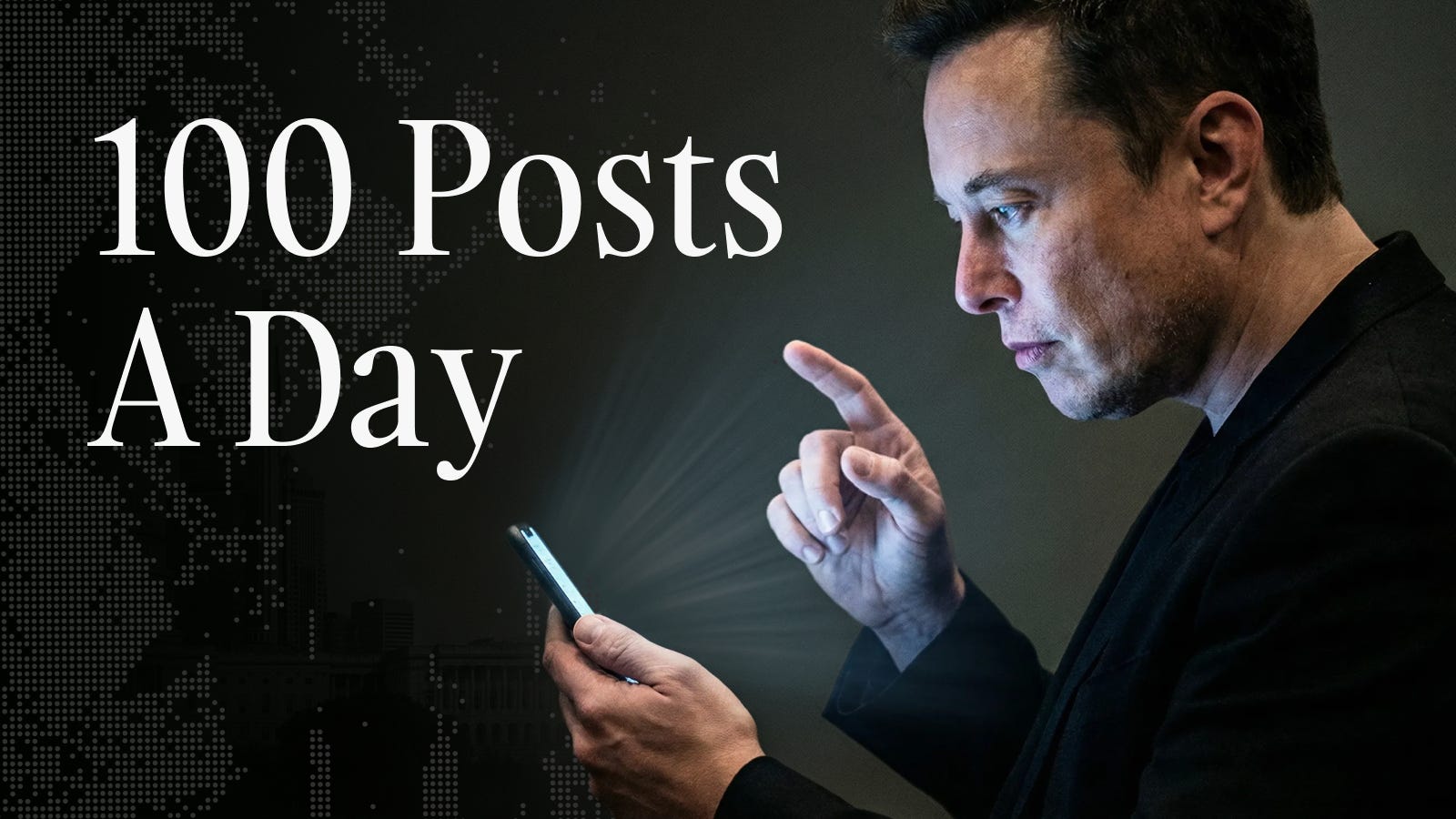
49 tweets between 3 and 4 a.m. One every 80 seconds. That was Elon Musk on February 2, 2025, while he was ostensibly leading the federal government’s efficiency initiative.
His friends have begged him to stop. “Get an ice cream cone. Just don’t use Twitter,” pleaded one investor. Grimes, the mother of three of his children, publicly wrote: “I love you but please turn off ur phone.”
His own response: “I think I should not tweet after 3 a.m.”
He kept tweeting after 3 a.m.
I wanted to understand why. Not the pop psychology version, but the structural version.
The Hotel Safe at 3 a.m.
In 2019, Tesla board member Antonio Gracias locked Musk’s phone in a hotel safe. Gracias entered the code himself so Musk couldn’t retrieve it. A well-meaning intervention, the kind of thing friends do when the habit has gotten bad enough that other people can see the damage.
Musk woke at 3 a.m. and called hotel security to crack the safe open. Walter Isaacson, who spent two years shadowing Musk, leads with this anecdote when discussing his relationship to Twitter. Most people hear it and think “addiction.” I did too, at first. Then I looked at the numbers.
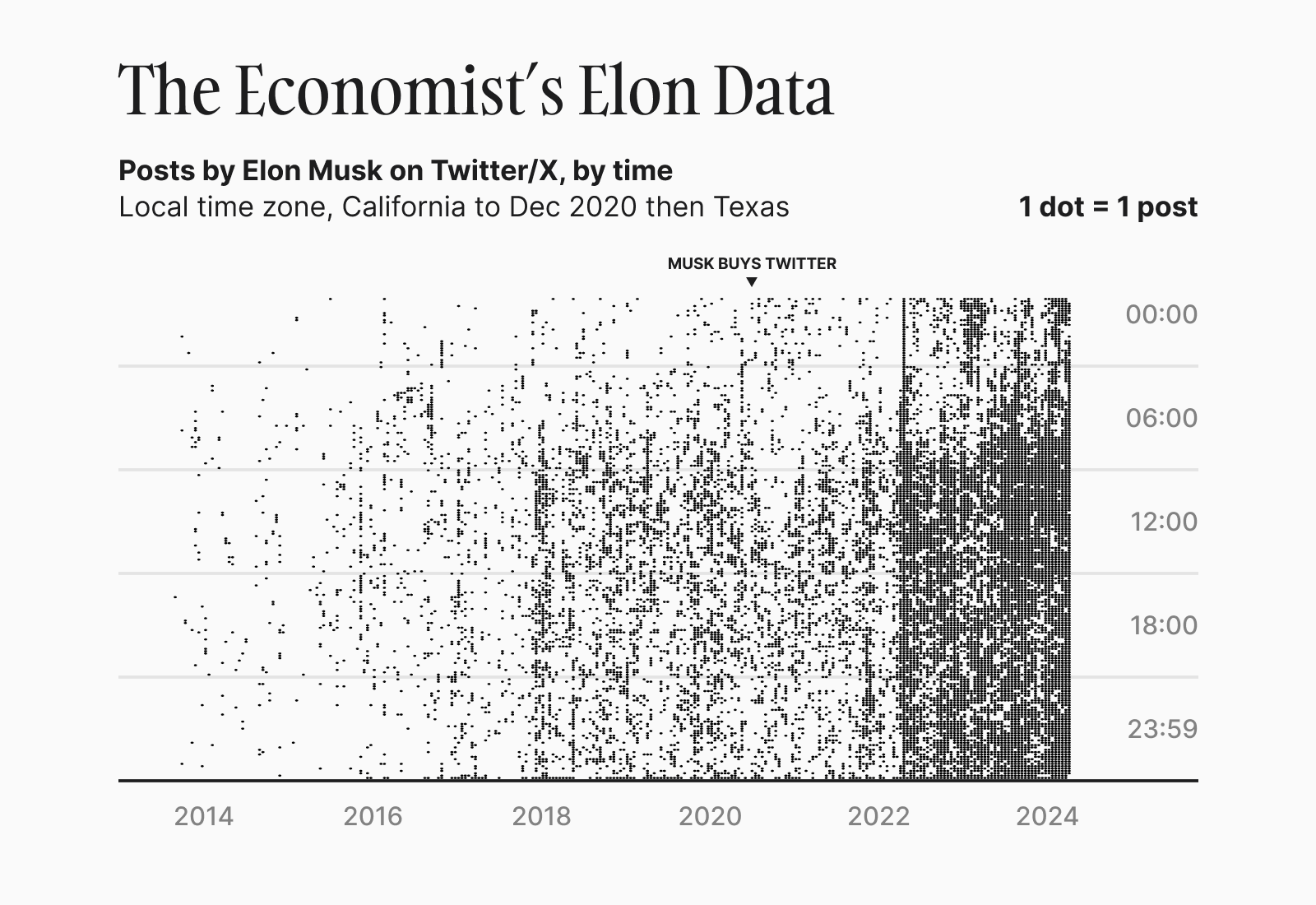
In 2018, the Wall Street Journal analyzed 4,925 of his tweets and found it was common for him to post more than 30 times in a single day. By mid-2024, independent analysts measured 67.8 tweets per day over a seven-week span.
Then the 2024 election arrived. Le Monde counted 101 tweets daily between October 5 and November 5. The Washington Post documented 3,870 posts in 26 days (roughly 130 per day), generating over 33 billion views.
During his first 15 days heading DOGE, Irish broadcaster RTÉ counted 1,494 posts, peaking at 178 on a single day. The content shifted as dramatically as the volume: the Washington Post found political tweets rose from 2% of his feed in 2021 to 17% in 2024.
A 2025 academic paper in SAGE Open, analyzing 2,391 tweets through personality modeling, documented the transformation from “neutral and technology-centric discourse” to “politically engaged and emotionally charged presence.”
An independent analyst cross-referenced his posting times with Jack Sweeney’s private jet tracker to estimate time spent on the platform. The conservative number was 3.2 hours a day.
The richest person on earth spends more time posting than most people spend commuting. And the curve is still going up.
The natural response is that he’s wasting his time. That it’s ego, or compulsion, or both. But there’s a problem with that explanation, which is that the returns are enormous and measurable.
And there’s a problem with calling it pure strategy, too: no strategist calls hotel security at 3 a.m. to crack a safe for his phone. The compulsion and the payoff are wired into the same system. Tracing how that system works starts with the money.
The $0 Marketing Department
Tesla, through 2022, spent effectively $0 on traditional advertising. Zero. GM spent $5 billion annually. Ford spent $4.3 billion. Tesla spent nothing. Musk’s personal account (more followers than Ford, Chevrolet, and Chrysler combined) was the marketing department.
The company reached a trillion-dollar market cap on the back of earned media, and Musk’s timeline was the engine producing it. Tesla topped the Wall Street Journal’s list of brands with cultural traction, beating Apple and Nike.
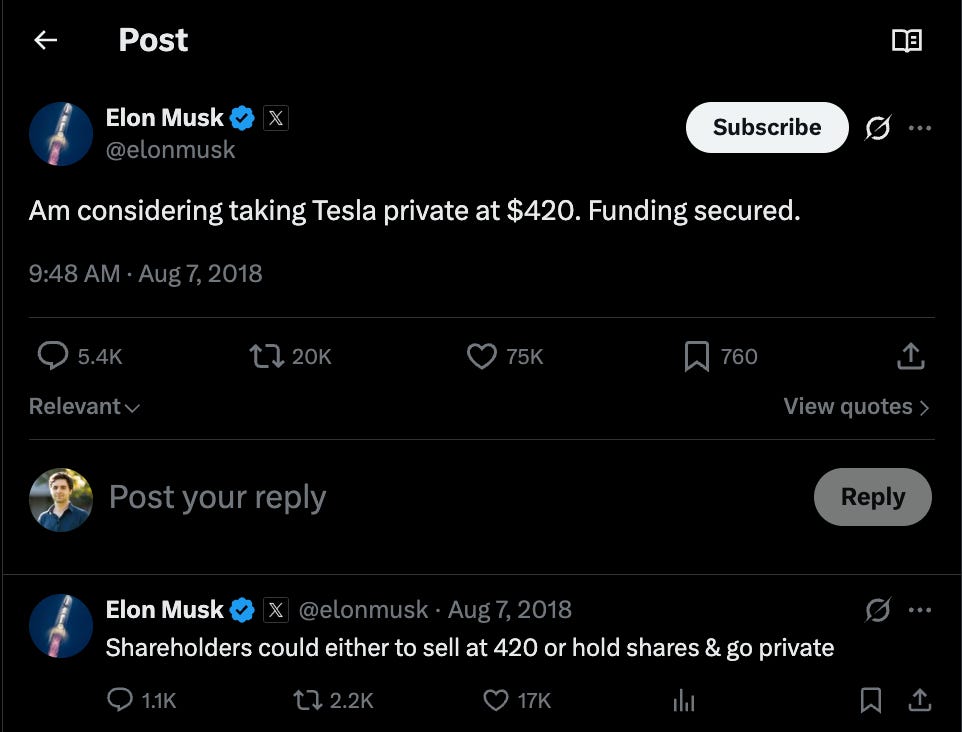
Each individual tweet carried financial weight that entire corporate communications departments couldn’t match. His August 7, 2018, “funding secured” tweet drove Tesla stock up 11% intraday before a halt; expert testimony in the subsequent class-action case estimated $12 billion in aggregate investor harm.
On the upside, a single 2025 tweet detailing Tesla’s AI chip roadmap added approximately $90 billion in market cap in one session. An academic event study analyzing 47 crypto-related Musk tweets found individual posts moved Bitcoin by up to 16.9% in either direction.
No other individual on earth can move this much capital with a sentence typed on a phone. The people closest to him knew it, and they tried to stop it. Tesla investor Joseph Fath compared Musk’s tweeting to Lindsay Lohan’s erratic public behavior and emailed him: “Remember the golden rule. Delete. Don’t Tweet.”
Less than three weeks later, Musk sent the “funding secured” tweet that led to $40 million in SEC fines. The SEC settlement required his resignation as chairman and a consent decree mandating pre-approval of tweets containing material business information, a mechanism people around him called the “Twitter sitter.”
Musk repeatedly violated it. When he tried to terminate the consent decree in 2022, Judge Lewis Liman denied the motion, calling his arguments “meritless.” The Second Circuit upheld the settlement in May 2023. He kept posting.
The hotel safe, the SEC consent decree, the pleas from investors, the judge calling his legal arguments meritless: these are all attempts to build a wall between this man and his phone. Every single one failed. And when you see the returns those tweets generate, you start to understand why.
But advertising replacement and market-moving are the obvious parts. The less obvious part is what happened after he bought the platform.
The Man Who Owns the Acoustics
In February 2023, Musk’s Super Bowl tweet about the Philadelphia Eagles received roughly 9 million impressions. President Joe Biden’s Super Bowl tweet got 29 million. For a man who had just paid $44 billion for the platform, this was apparently intolerable.
Musk flew his private jet to Twitter headquarters that Sunday night. His cousin James Musk sent a Slack message to engineers at 2:36 a.m. flagging a “high urgency” issue. Approximately 80 engineers were pulled in.
By Monday afternoon, the recommendation algorithm included what internal documents called a “power user multiplier” that boosted Musk’s tweets by a factor of 1,000.
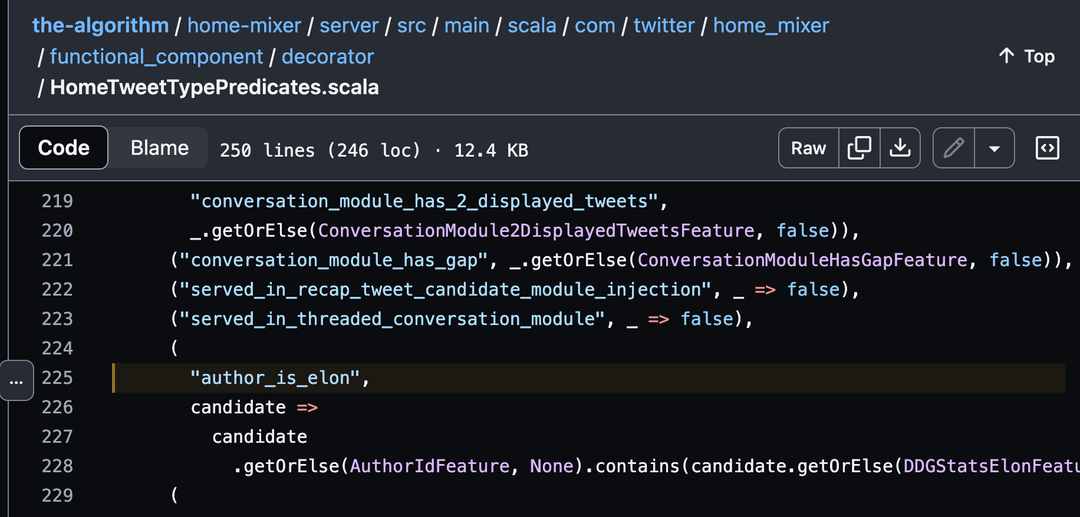
When Twitter open-sourced its recommendation algorithm two months later, the code revealed “author_is_elon” as its own category, sitting alongside “Democrat,” “Republican,” and “Power User.”
A literal hardcoded privilege in the system. Internal estimates found over 90% of Musk’s followers now see his tweets in their “For You” feed. Platformer broke the story. Bloomberg confirmed it.
Rather than just owning a megaphone, he owned the acoustics of the room.
The effects were … measurable. Queensland University of Technology researchers found a statistically anomalous engagement boost starting July 13, 2024 (the day of his political endorsement): view counts up 138%, retweets up 238%, likes up 186%, far outpacing comparable political accounts. The AP found his interactions with a German politician boosted her daily audience from 230,000 to 2.2 million.
During the four months around the 2024 election, his posts received 133 billion views: 15 times the audience of any individual elected official, more than 16 times the combined reach of all incoming members of Congress.
But reach is a broadcasting metric. What the algorithm actually gives him is something closer to cognitive infrastructure: 133 billion moments where his framing of an event arrives before anyone else's. When a story breaks on X, Musk's interpretation is often the first one users encounter, and the first frame installed tends to be the one everything else gets measured against. He owns the order in which people receive their thinking.
Political strategists spend millions finding the right word for a policy; “death tax” polls differently than “estate tax.” Musk skips the word choice entirely. He controls the infrastructure through which the words travel, determining which stories get oxygen and which suffocate.
Paddy Leerssen, a researcher at Stanford’s Center for Internet and Society, published a paper in 2025 naming what Musk was doing: “economic instrumentalism,” which he defined as leveraging platform control over public discourse to protect a portfolio heavily dependent on government contracts. Musk’s companies have received $38 billion in cumulative government contracts, loans, subsidies, and tax credits. The posting and the portfolio are connected, and the connection runs through the algorithm.
The Ledger
So there are two sides to this, and the tension between them is what makes Musk so hard to categorize.
On one side: a trillion-dollar company built on $0 in advertising, 220 million followers, 133 billion views in four months, a government appointment, and $38 billion in contracts across his companies.
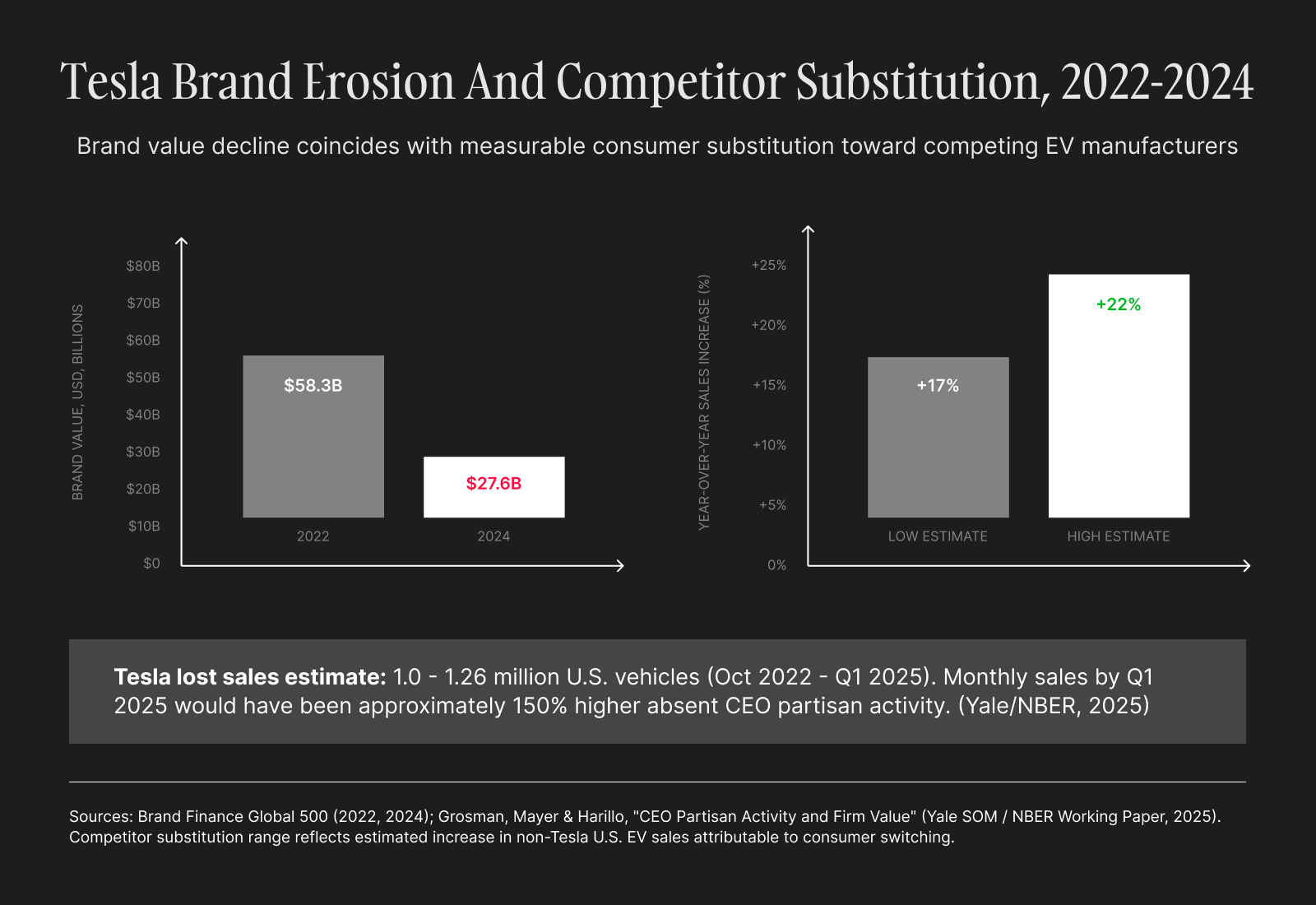
On the other: a Yale and NBER study (the first rigorous academic analysis of CEO partisan activity’s impact on sales) found his polarizing behavior since October 2022 cost Tesla between 1 million and 1.26 million U.S. vehicle sales. Monthly sales by Q1 2025 would have been approximately 150% higher without the partisan activity. Competitors’ EV sales increased 17 to 22% as customers substituted away. Tesla’s brand value collapsed from $58.3 billion to $27.6 billion, a 53% decline in two years, per Brand Finance.
Then there’s the advertiser exodus. In November 2023, Apple, Disney, IBM, Comcast, Warner Bros., and Paramount all pulled their ad spending from X. Internal documents tracked over 200 ad units from companies pausing or considering pausing. At the DealBook Summit shortly after, Musk told departing advertisers to “go f*ck yourself,” specifically calling out Disney CEO Bob Iger. Then acknowledged the boycott could “kill the company.” U.S. advertising revenue during a five-week span in spring 2023 had already plunged 59% year-over-year.
A million lost car sales and a 53% brand value collapse on one side. A $38 billion government contract portfolio and 133 billion views on the other. Both columns are growing simultaneously, which is exactly what makes the standard explanations fall apart.
Most analysis tries to resolve this tension by picking a side. Either he’s a genius playing 4D chess, or he’s someone who can’t stop posting. I think the more honest read is that both are true simultaneously, and that the inability to separate them is the whole point.
At CNBC, Musk offered his own version: “I’ll say what I want to say, and if the consequence of doing that is losing money, so be it.”
The Ford Parallel
When people reach for historical comparisons, they usually mention Hearst, Murdoch, or Berlusconi. But the parallel with real structural teeth is Henry Ford.
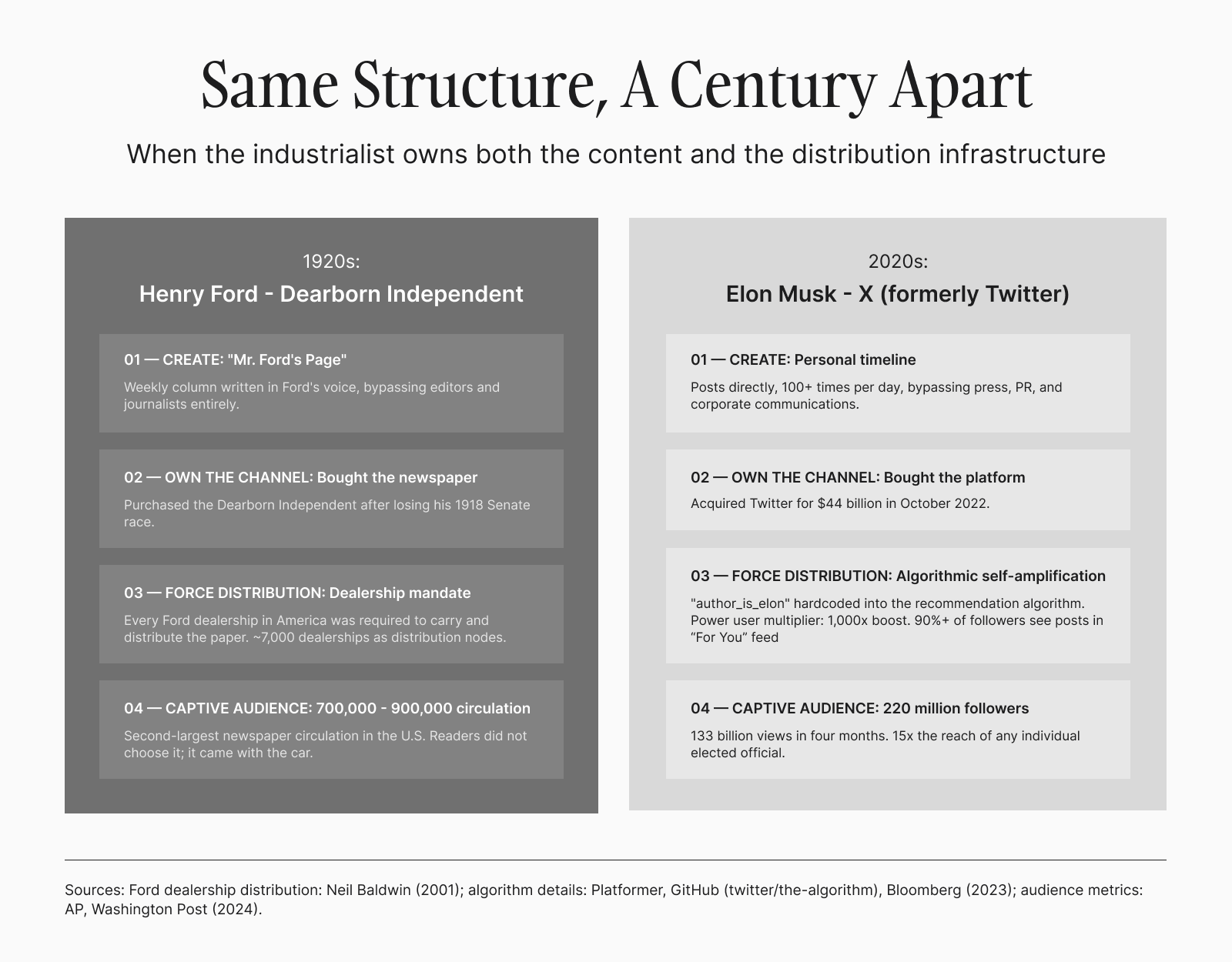
After losing a Senate race in 1918, Ford bought a newspaper and used it to shape public discourse by owning the outlet directly. The paper reached circulation of 700,000 to 900,000, partly because Ford required every dealership to distribute it.
Every Ford showroom in America became a node in a media distribution network. If you walked in to look at a Model T, you walked out with Ford’s newspaper. A forced-distribution system structurally identical to Musk’s algorithmic self-amplification: you don’t just write the content, you also control the delivery infrastructure that puts it in front of people whether they asked for it or not.
Ford’s “Mr. Ford’s Page” column, where the industrialist spoke directly to a captive audience and bypassed editors entirely, is a direct ancestor of the Musk timeline.
Both men built a manufacturing empire first, then acquired a media channel to protect and extend it. Both understood that owning production wasn’t enough; you had to own the narrative around the production. And both discovered that once you control the distribution infrastructure, there is no external check on what travels through it.
But Ford’s system had limits Musk’s does not. Ford owned factories and a newspaper, but he couldn’t measure in real time which articles resonated, couldn’t adjust distribution speed by the hour, couldn’t suppress a competitor’s message while amplifying his own. He never held a government appointment.
Musk owns the platform, the algorithm, the content, and the audience simultaneously. He can post, boost the post, suppress competitors, and measure the results in real time, all within one system.
Hearst owned newspapers but not factories. Berlusconi held office and broadcast licenses but didn’t manufacture anything. Nobody before Musk has fused media ownership, industrial production, government authority, and personal celebrity into a single integrated operation.
The Engine
Former Tesla employee Christian Marcus described on LinkedIn how this integration actually worked day to day:
“When Elon Musk was informed that we were about to implement a new solution, he would respond in his Twitter feed and let our customers know... This created a powerful communication strategy that made it seem like we were able to react to customer needs and implement changes at lightning speed.”
The company looked impossibly responsive because the CEO’s timeline was synchronized with the engineering team’s deployment schedule. The tweets were coordinated announcements disguised as spontaneity.
That coordination extends across the entire portfolio. Tesla’s vehicle fleet generates physical-world data. X generates human discourse data. xAI’s Grok was designed to leverage X’s live information stream. Together they create a proprietary advantage no competitor can replicate, because no competitor owns both the cars and the conversation.
And the platform keeps getting harder to leave. Government agencies now use X as their primary communication channel, embedding it in public infrastructure. A 2022 paper in Celebrity Studies found that Musk represents “a hyper-celebrified mode of management that has yet to be reproduced by any other executive,” one grounded in “constant conflict” rather than the usual corporate optimism.
A 2025 study in Public Relations Review found that controversy from celebrity CEOs leads to immediate stock declines, but those declines are “partially buffered by high message visibility.”
The more visible you are, the more the market forgives you for being erratic. And Musk is the most visible CEO who has ever lived.
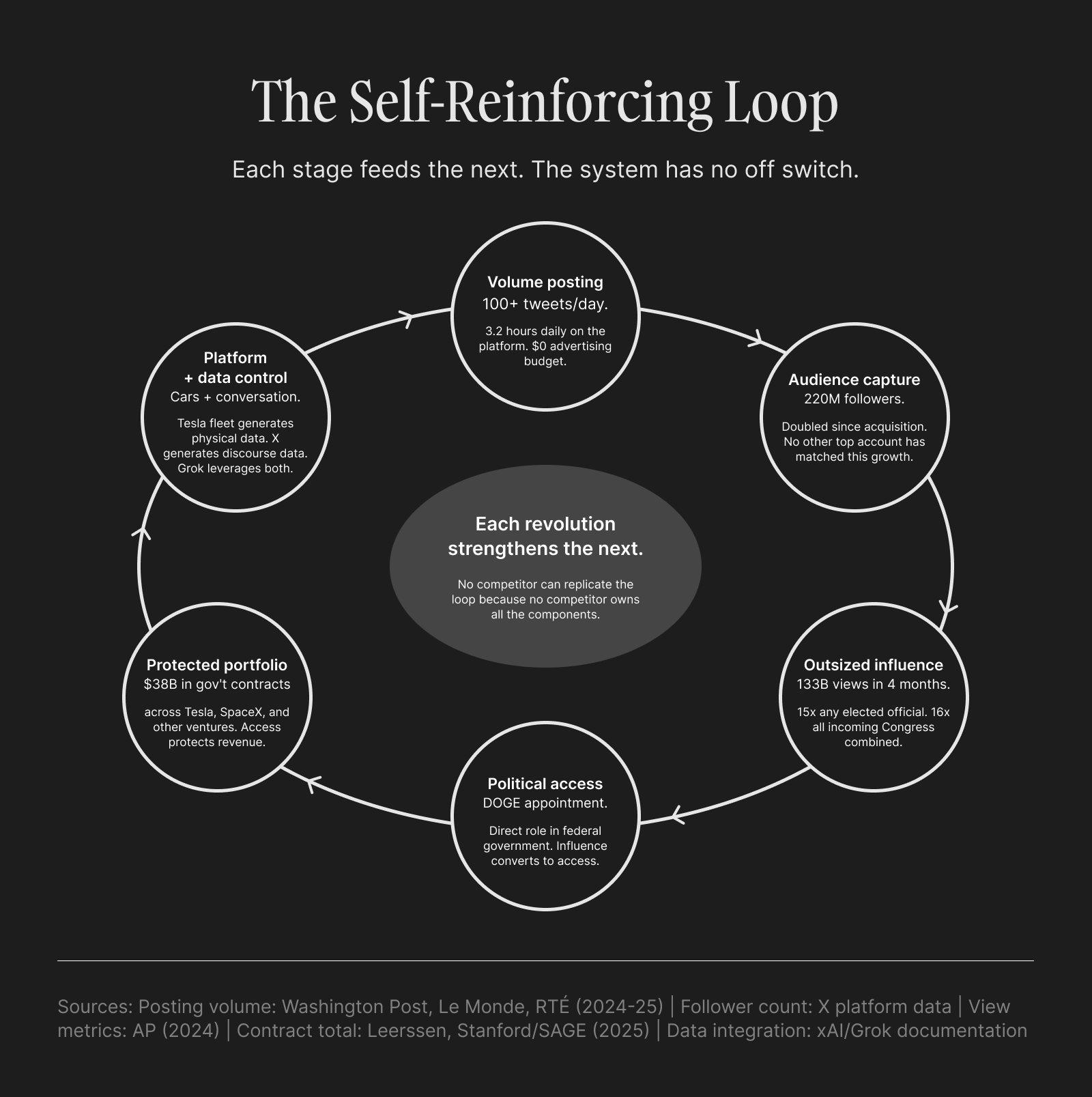
All of it feeds a single loop. More posting drives more followers (his count has more than doubled since acquiring X, reaching 220 million, with no other top account achieving comparable continuous growth). More followers generate outsized influence. That influence converts to political access. Political access protects $38 billion in government contracts across SpaceX, Tesla, and his other companies. And those business resources sustain control of the platform where the posting happens.
As Harvard political scientist Steven Levitsky put it: “This is a combination of economic, media, and political power that I believe has never been seen before in any democracy on Earth.”
Isaacson posed what I think is the right question: “Would a restrained Musk accomplish as much as a Musk unbound?”
The answer is probably “no.”
The same compulsive energy that wakes him at 3 a.m. to break into a hotel safe for his phone is the energy that built a trillion-dollar company on zero advertising dollars.
The same impulsivity that cost a million car sales also produced 133 billion views in four months. The strategic and the pathological are fused, and that fusion is the engine.
The people around Musk have tried everything to separate them. Hotel safes, SEC consent decrees, judicial rulings, public pleas from the mother of his children. None of it worked, and none of it was going to, because the system he’s built doesn’t distinguish between the compulsion and the strategy.
They run on the same circuit, through the same phone, at the same hour of the night.
“I’ll say what I want to say, and if the consequence of doing that is losing money, so be it.”
The phone is where the trillion dollars lives.