

He Created Tetris. The Soviet Union Kept Every Dollar.
The category "game designer who owns his creation" didn't exist. Not suppressed. Just absent.

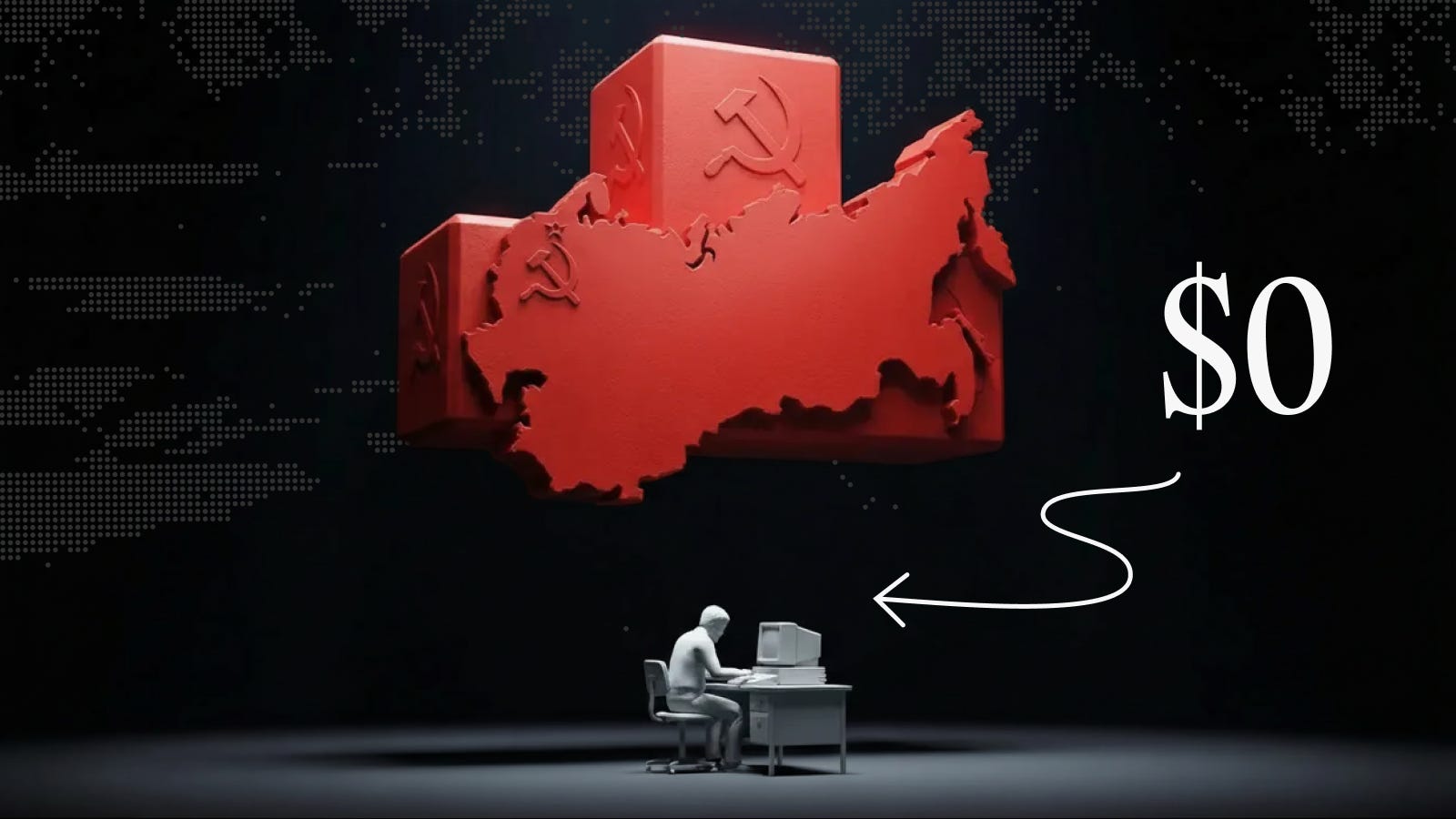
In 1989, Alexey Pajitnov had created the most addictive video game on the planet. Tetris was generating millions of dollars across three continents.
His compensation from the Soviet Academy of Sciences: one IBM PC/AT, already obsolete by Western standards.
Pajitnov wasn’t robbed. That framing assumes a thief, a victim, and a shared understanding of what “ownership” means. The category “game designer who owns his creation” didn’t exist. Not suppressed. Not forbidden. Just absent, the way a color you’ve never seen is absent.
The Soviet system had no slot for Pajitnov, and the Western system had no way to explain why.
This is a story about what happens when two worlds collide and discover they aren’t even disagreeing.

The Crowded Desk and the Missing Category
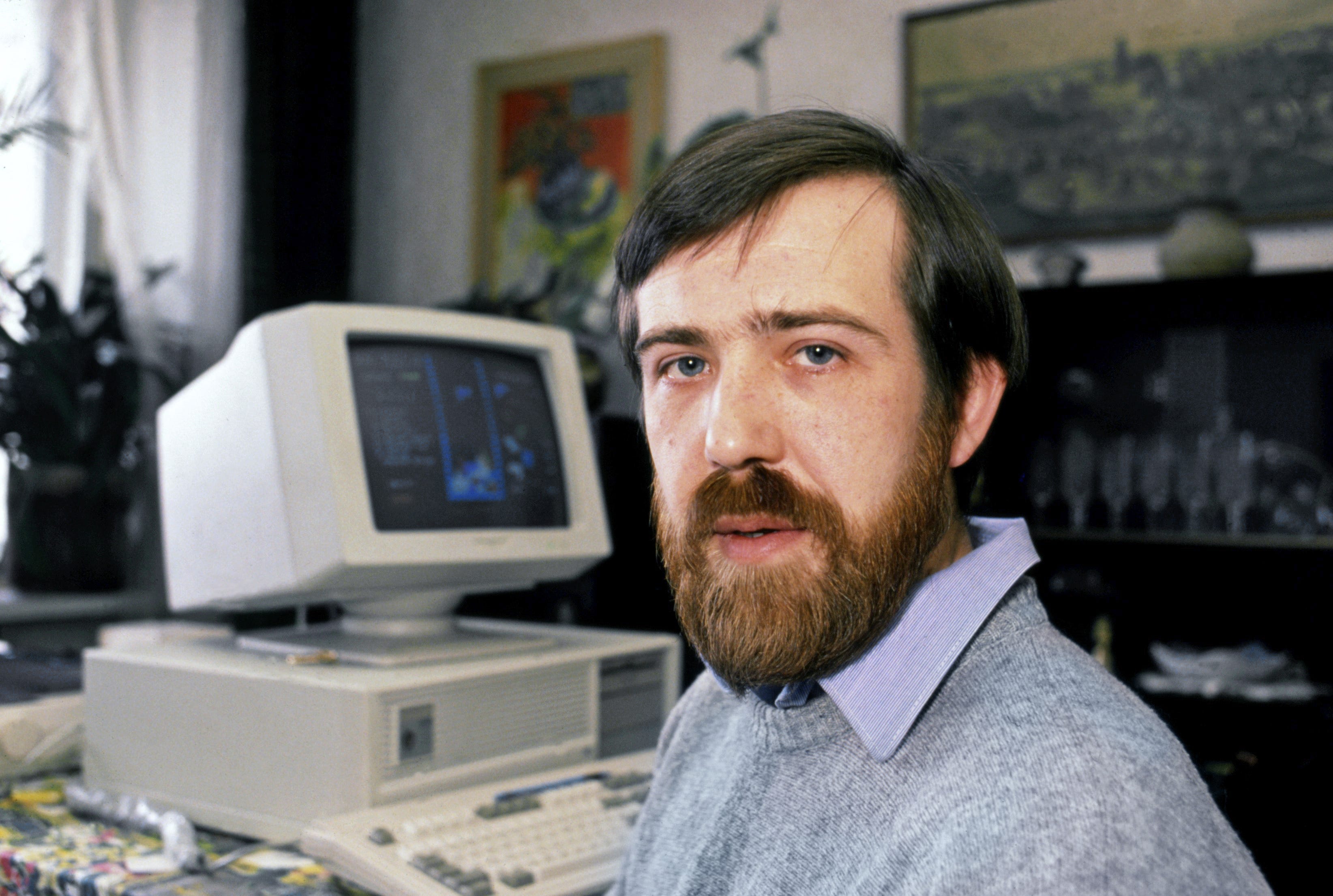
Pajitnov woke between 7:30 and 8 AM, “maybe later, because I worked until midnight every day.” Breakfast was sausage, eggs, and cottage cheese.
He arrived at the Computer Center of the Soviet Academy of Sciences around 10 AM, where his workspace was, in his own words, “extremely crowded, a room built for four or five people seated at desks. On most days it had to accommodate 15 researchers.” He shared his desk with three other people.
The real work happened late, after the desk cleared out.
The Computer Center was busy solving differential equations for outer space and nuclear war. “Nobody gave a shit about this stuff, you know, a small, little game,” Pajitnov said. “Games were something absolutely alien for them.” He built the first Tetris prototype in two weeks on an Elektronika 60 with only 8 kilobytes of RAM, programming in Pascal.
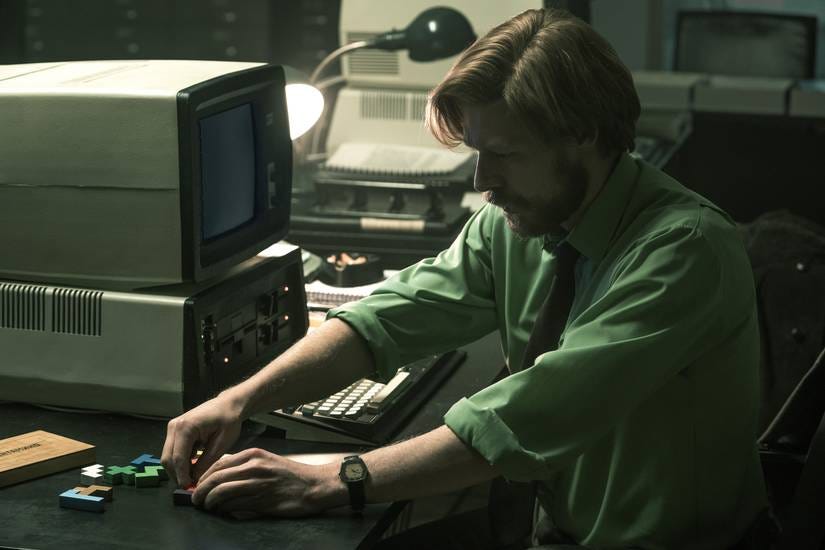
Meanwhile, the KGB was interested in his other work: automatic speech recognition. They wanted to build an audio surveillance system that would start recording automatically when certain “dangerous” keywords were uttered. Pajitnov and his colleagues “tried to avoid, obviously.”
That detail has stayed with me. The KGB showed up at Pajitnov’s crowded desk for the speech recognition work. Nobody showed up for Tetris. The system’s priorities were internally consistent.
The only tangible reward the system ever gave him for creating the most popular video game in history was that single obsolete computer.
He had signed over the rights to the Computer Center for ten years: “It was easier and wiser for me to allow this arrangement than to try to fight for certain personal rights that were almost non-existent during that time.”
And then, remarkably: “You can’t imagine how much internal laws and instruction I overstepped during this time. It’s unbelievable. So if somebody would really look at me, I would be definitely in jail.”
No bitterness. His public stance has been consistently philosophical: “I didn’t make much money at first.” He said he was “happy that so many people were enjoying his creation.”
Pajitnov inhabited a world where the concept of individual ownership of creative software simply did not exist. You can’t feel robbed of something your entire reality has no container for.
A Gray World With No Advertisements
In February 1989, a Hawaiian game designer named Henk Rogers flew to Moscow on a tourist visa, which meant even discussing business was technically illegal. His overwhelming impression was captured in a single word: gray. Gray skies, gray streets, gray and unsmiling people.
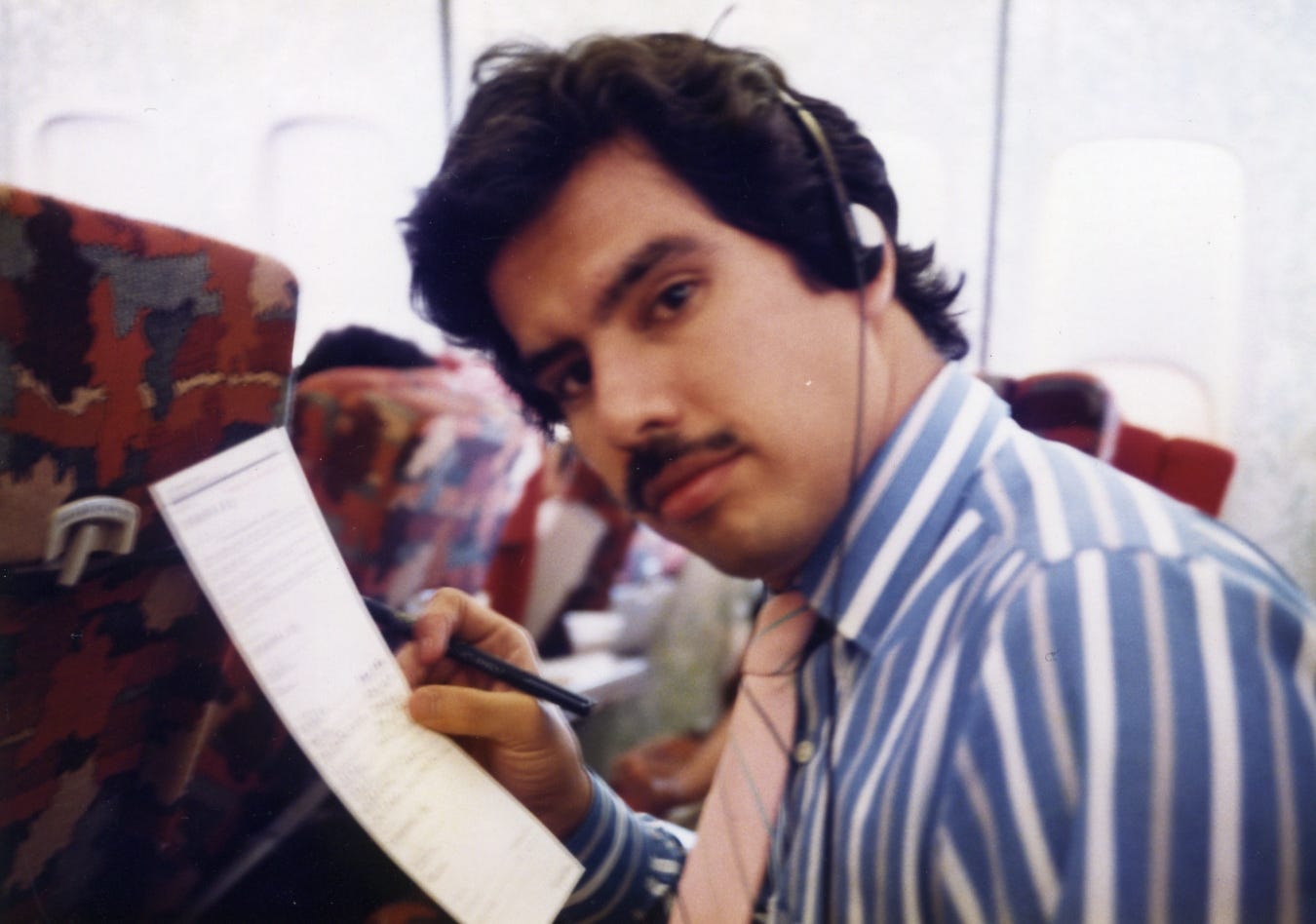
The television in his Intourist Hotel room showed only static. The radio played only noise. What disturbed the born marketer most was the complete absence of advertisements: “Nobody was trying to sell you anything!” His brother, who accompanied him on a later trip, “likened it to being in a prison. No colour anywhere.”
Rogers had catastrophic reasons for being there. He’d already convinced Nintendo of America president Minoru Arakawa to bundle Tetris with every Game Boy. Two million dollars’ worth of Game Boy units were already being manufactured, and his in-laws’ property in Hawaii was pledged as collateral.
“I was in deep ‘kimchi,’” Rogers told SpyScape, “because I had 200,000 game cartridges at $10 apiece being manufactured in Japan, and I’d put up all of my in-laws’ property as collateral.” Failure would have destroyed not just his company but his extended family’s financial security.
He couldn’t even find ELORG, the Soviet agency that controlled the Tetris rights. The hotel information desk had no listing. He hired an interpreter from a booth in the hotel lobby who he was certain was KGB but who knew exactly where to go.
Then Rogers did something no Soviet bureaucrat would have anticipated. He simply walked up unannounced and knocked on the front door.
“It was like walking into an ant’s nest because people don’t walk in off the street. Everyone has an appointment and I was supposed to go to a window and present my credentials and I didn’t. I just talked to a random person and said, ‘I’d like to speak to somebody about Tetris,’ and I showed him my little NES version of the game.”

He was promptly interrogated for two hours. Seven people were in the room, “some of them KGB types, being given the third degree.” Rogers’s way of charming police during speeding tickets, he noted, “wasn’t going to work in Moscow. I felt I could end up in a gulag.”
Rogers held up a Nintendo cartridge containing Tetris. To him, it was a commercial product with licensing rights attached to a chain of creators and distributors, and he needed to secure those rights or lose everything.
To the seven officials staring at him, it was something else entirely: unauthorized reproduction of state intellectual property, created by a state employee at a state institution, the rights to which belonged to a state agency.
Same plastic cartridge, two incompatible realities. Thomas Kuhn noticed this same structure in the history of science: where a Newtonian sees a pendulum, an Aristotelian saw constrained free fall.
Same swinging weight, different ontologies. The men in that room weren’t disagreeing about who owned Tetris. They were looking at the same object and seeing different realities.
Foxes, Bodyguards, and a Pidgin for Power
Rogers wasn’t operating inside anyone’s paradigm. He was improvising at a boundary between worlds that had no common language for what was happening. So how did the deal get done?
The answer involves a Soviet bureaucrat named Nikolai Belikov, and it reveals how coordination happens even when mutual understanding doesn’t. Belikov replaced Alexander Alexinko in handling the Tetris negotiations in October 1988, and he was no ordinary apparatchik.
He had built a reputation as “the consummate bureaucratic in-fighter, a master of the art of the well-timed back stab whom you trifled with at your peril. He was the sort of man who was put on the job to do an agency’s dirty work.”

When Rogers walked in unannounced, Belikov didn’t turn him away. He realized “a third party to play against the other two could be a very good thing to have.” Robert Stein, the Hungarian-born middleman who had first brought Tetris to the West, was a “pugnacious” operator whose fatal habit was selling rights before securing them.
He’d sold Tetris PC rights to Mirrorsoft for £3,000 plus royalties before he had any signed agreement from Moscow, maintaining a “Chinese wall” between his Western partners and the Russians, keeping each side ignorant of what the other knew.
Belikov dismantled him by adding a clause to Stein’s contract specifically excluding console rights while distracting him with other changes. “Stein, so focused on just getting the rights, neglected to see the new clause.”
The physicist Peter Galison studied this kind of problem in twentieth-century physics, where theorists, experimentalists, and instrument-makers from entirely distinct communities somehow managed to do productive work together.
His concept was the “trading zone”: a space where two groups can agree on rules of exchange even if they ascribe utterly different significance to the objects being exchanged. Contact languages develop in stages, Galison observed. Jargons become pidgins, pidgins become full-scale creoles.
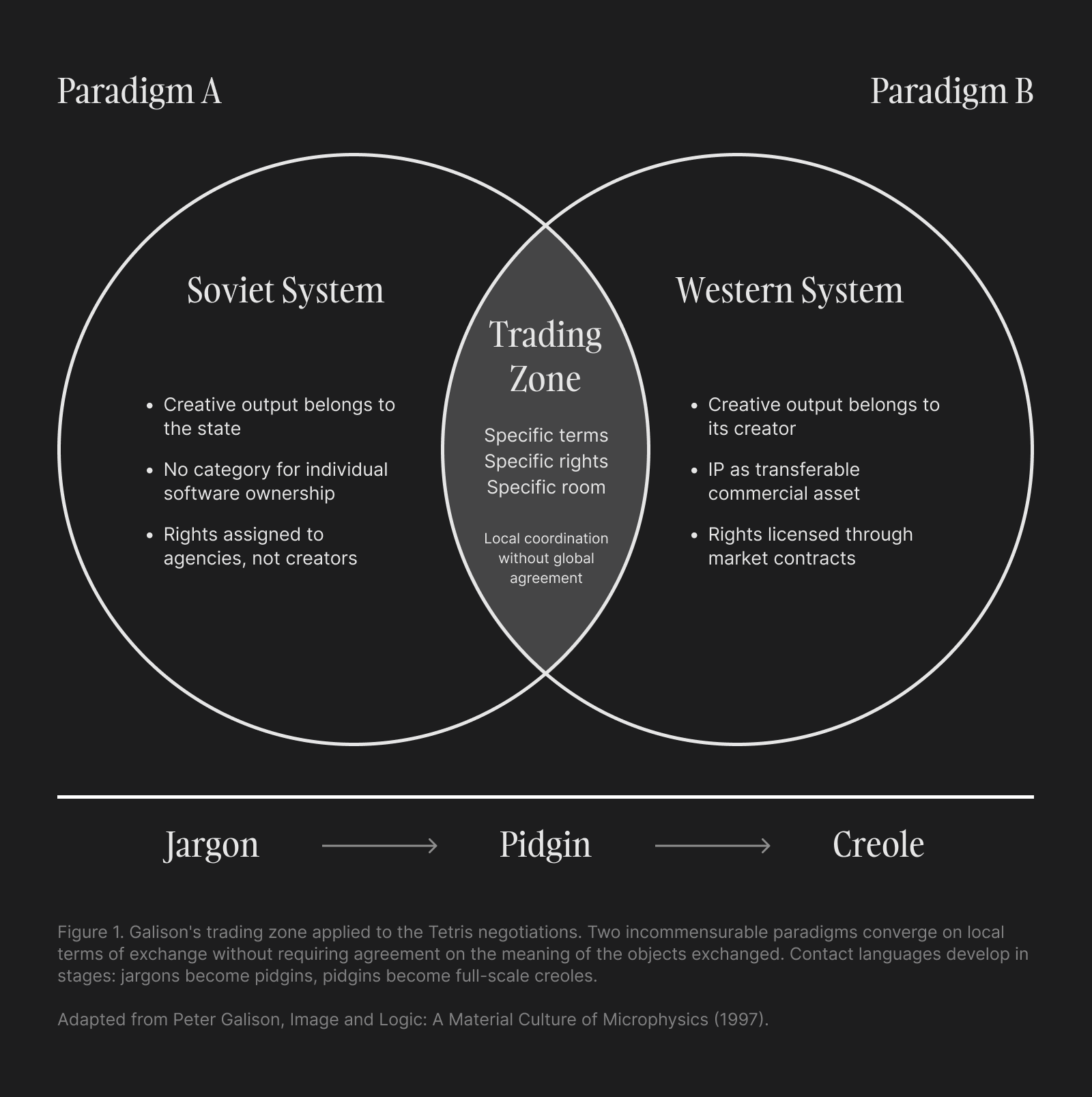
Belikov was building a trading zone. He didn’t need Rogers, Nintendo, or Stein to share his understanding of what Soviet state property meant. He just needed them to converge on specific terms for specific rights in a specific room. And he found an unlikely counterpart in Nintendo’s Howard Lincoln.
The two were described as “two sly old foxes with far more in common than the gulf of culture, language, and politics that lay between them might suggest.” They “sniffed one another out.”
The signing ceremony on March 22, 1989, had the weight of deliberate theater. Lincoln and Arakawa had traveled to Moscow in secret, telling only two confidants where they were going and using a cover story about visiting Nintendo’s parent office in Japan.
Two heavyweight Soviet bureaucrats attended as witnesses. Nintendo guaranteed ELORG would make at least $5 million. Previous negotiations had dealt in nickels and dimes, “$50,000 here, $100,000 there.” Nintendo’s offer “elevated the discussion to another financial plane entirely.”
But Belikov faced real consequences for building his trading zone. Several influential Soviet officials were displeased. He was questioned by prosecutors. There were rumors of bugs in telephones and men in trench coats trailing people through the streets.
Belikov hired a pair of personal bodyguards. His defense was elegant: Gorbachev said producers needed economic freedom. He was “just doing perestroika.”

Meanwhile, Mirrorsoft’s position had already been torpedoed by Kevin Maxwell, son of media baron Robert Maxwell. When Belikov showed Kevin a Tetris cartridge for the Nintendo Famicom during a meeting, Maxwell had no idea what it was, despite the fact that his own company supposedly held the console rights.
Instead of asserting Mirrorsoft’s claim, he told Belikov he would “entertain a deal” for the console rights, inadvertently confirming that Mirrorsoft’s position was hollow.
When Kevin told his father, Robert Maxwell “went apeshit” and contacted Gorbachev directly. Gorbachev, dealing with a country on the verge of collapse, told Maxwell: “You should no longer worry about the Japanese company.” By then, the contract was signed.
Stein, the man who first brought Tetris to the West, reportedly walked away with only $150,000 to $200,000 total. He “never really got over losing Tetris since he believes it turned friends into enemies.” He died in 2018.
But trading zones don’t always get built successfully. On February 6, 1840, at Waitangi in New Zealand, Captain William Hobson signed a treaty with Māori chiefs. The English text stated that Māori ceded “all the rights and powers of sovereignty.”
But the missionary translating overnight rendered “sovereignty” as “kawanatanga,” a neologism with no prior existence in Māori, while the Māori text guaranteed chiefs “tino rangatiratanga” (full chieftainship).
A bystander known as “Trader Jack” interrupted the proceedings: “Begging your pardon, Sir, but it’s that Mr Williams. He’s not translating a good half of what the Māori say.” In 2014, the Waitangi Tribunal concluded that “the rangatira who signed te Tiriti did not cede their sovereignty.”
No shared object. No pidgin. Just two complete worldviews, each internally coherent, generating a wound that 185 years have not closed.
Belikov’s achievement was building the narrow table at which incommensurable parties could sit. Whether what happened there constituted understanding or merely coordination is a question the participants themselves might not have been able to answer.
The Pidgin That Worked
Amid all the foxes and bodyguards and collapsing empires, the friendship between Rogers and Pajitnov is the thread that makes this story more than a business case.
When they met during the ELORG negotiations, Pajitnov saw something different from the parade of suited businessmen: “Finally out of all this dressed-in-suit business world, I saw a guy who really liked and understood the game. And somehow we liked each other, almost immediately.”
Rogers recalled: “He was the friend I was looking for in Russia. We got together that night, started talking about game design, immediately jumped into Tetris II. We had stuff to talk about.”
That first night, they drank vodka inside the Pajitnov family’s humble apartment, communicating despite Pajitnov’s broken English and Rogers’s nonexistent Russian. The recognition was professional. “Alexey figured out right away that I was not just some con artist, I was a game designer.”
Rogers noted the decisive difference between himself and Robert Stein: Pajitnov “offered me nothing and asked for nothing.”
Two game designers, from incommensurable worlds, who could not agree on what ownership meant, what a government was for, or what an individual creator was owed. But they could recognize each other across the gap. They could talk about game design. That narrow band of shared understanding became the pidgin through which everything else was eventually negotiated.
For Rogers and Pajitnov, the shared object was the game itself. Trading zones don’t require mutual comprehension. They require something both sides can point to, even if they describe it in different languages. Belikov built his zone out of contract clauses and hard currency. Rogers and Pajitnov built theirs out of falling blocks and vodka.

The long arc confirms it. Pajitnov immigrated to the United States in 1991, settling in Bellevue near Seattle. His work visa was sponsored by Rogers’s company. Six months later, his wife Nina and their sons Peter and Dmitri joined him.
Rogers sold a 15-year license to Tetris to Jamdat (later EA) in 2005 for $137 million, cleverly retaining ownership: “I get the rights back in five years so I can sell them again.” He became one of the wealthiest people in Hawaii.
Belikov, savvy as ever, turned ELORG into a private company after the USSR dissolved and sold his Tetris stake in 2005 for $15 million, with the deal signed in Panama, “in an episode that had much the same spy-movie flavor as the original negotiations.”
The Color You’ve Never Seen
Pajitnov got his computer, then got his freedom, then got his royalties. Rogers risked his family’s home and won a fortune. Stein brought Tetris to the world and died having never recovered from losing it. Belikov became a capitalist. Maxwell lost out.
Kuhn articulated something scholars call “Kuhn Loss”: when one paradigm gives way to another, “problems whose solution was vitally important to the older tradition may temporarily disappear, become obsolete or even unscientific.”
They don’t get answered. They become unthinkable. When the Soviet system dissolved, certain questions (who does creative output belong to collectively? how should a state allocate intellectual work?) didn’t get resolved; they simply evaporated.
At the end of The Structure of Scientific Revolutions, Kuhn asserted that science does not evolve toward anything but only away from something. There is no destination. There is only departure.
The Tetris story works the same way. We didn’t arrive at a resolution where everyone finally agreed on what intellectual property means, who creative output belongs to, or what a game designer deserves. We just departed from one configuration and entered another.
And what stays with me is not who won. It’s the moment before the collision, when each side’s categories were complete and internally coherent and absolutely invisible to the other.
The Soviet system wasn’t evil for failing to compensate Pajitnov. It was something more unsettling than that: it was whole. It had its own logic, its own categories, its own coherent way of making sense of creative work. The slot for “game designer who owns his creation” was absent, the way a color you’ve never seen is absent.
And no amount of arguing, negotiating, or even winning can make you see a color that isn’t in your spectrum.
Only a shared game could do that. And even then, only between two people at a kitchen table, not between two worlds.
Fantastic read! I just watched the film Tetris. Very entertaining and mostly accurate (obviously some parts were dramatized for entertainment value.) Would you suggest reading Kuhn? I’m familiar with Kuhn via Joel Barker and his work on paradigms.
This was an interesting read. I never heard about the story of Tetris before. Everyone played that game growing up on the 90's. Thanks for sharing.